Browsing Category

All posts

All posts

In which I am 50

March 1, 2015

I have a very clear memory from when I was 13 or 14 of thinking that if I actually lived to the grand old age of 25, I would kill myself.  The idea of living beyond that seemed horrific – anyone older than that was, well, really old – ick!  I know that this is a shocking thing to say, unless you, dear reader, are 13 or 14 yourself, and then you will understand 🙂

As it turned out, I didn't progress my teenage plan and felt slightly horrified when I became 50 years old on 27th February.  I decided to make the best of things and told him indoors that I wanted a quiet birthday, doing the stuff we love to do.  So, after opening my rather lovely gifts and imagining the horrified cries of my 14 year old self at the very idea, we set off for the day with our National Trust membership cards.

The weather was absolutely lovely – a bit chilly but sunny and bright with gorgeous blue skies, just how I like it.  There aren't a lot of places open in Februrary, but we found one place in Norfolk and decided to head there first and follow our noses towards the coast thereafter.

Oxburgh Hall is a 15th century moated manor house originally built by the Bedingfield family.  It was remodelled in the 18th and 19th centuries and almost torn down to make way for a housing estate in 1950, when it was saved by three female family members, who sold their own houses to buy it back from the developer:

We enjoyed looking round the house and although I can't say the interior particularly caught my fancy, the architecture is lovely:

There were a number of interesting pieces to see indoors as well, including Mary Queen of Scots' needlework scissors:

You can see also see the 'Marian Hangings', stitched by Mary and Bess of Hardwick.  Mary worked on these while imprisoned in England by her cousin Elizabeth I:

There are some lovely wooden doors on the bedrooms floor and the painted wallpaper is amazing, although it is understandably kept a little dark, so not so easy to see.  Mark managed to get a lovely picture of a section of it over one of the doors though – I love the colours:

In one of the bedrooms, there were some costumes on display but sadly, they were behind very reflective glass, so it was difficult to get a decent shot, but Mark managed to capture most of this day dress:

Strangely, the piece that I found myself most taken with was a carved study of a collection of fish that was oddly displayed in a room that is set as a bedroom (the Gatehouse Chambers):

Can't say I was in love with the pink artex on the wall behind the fish…

We headed north towards the coast next and driving towards Cromer we spotted a heritage sign for a castle and priory at a village called Castle Acre.  Although the priory was closed, the castle turned out to be a gigantic motte and bailey Norman affair from the 11th century:

Walking up and down all those hills and stairs after walking up and down little spiral stairways in the turrets at Oxburgh Hall, made my legs stiff the next day, but it was well worth it – the size of the place is quite impressive:

Cromer was our next and final stop and I was really glad we decided to go.  Although it was late in the day and very early in the year, there were some people around and even a couple of surfers, although they seemed to spend more time under the waves than on them.  We really only had time for a walk up the pier and down the beach, but agreed we'll definitely go back to explore the town properly later in the year as there seems to be lots to see.  For the time being though, I was happy to see the sea and pick up some lovely blue pebbles from the beach:

It was a very enjoyable day and, on balance, I'd say that being 50 is preferable to being dead 😉

(All pictures are by Him Indoors)


All posts

Liberty Love

February 23, 2015

There's a limit to how long I can go until I just have to sew with a little Liberty lawn, and I reached that limit over the weekend.

I just love working with this fabric – the patterns, the colours, the feel of it – gorgeous.  I'm also quite keen on working with Robert Kaufman linen blends – the dark pink here is an Essex Linen and the pale pink is the Brussels Washer – very different handles, but both lovely.

Of course, there also seems to be a limit to how long I can go between making sewing cases – they are a bit of an obsession of mine.  These two are outrageously girly and just had to have ribbon tie closures rather than the usual button closure.

Apart from the actual construction of the cases, everything is hand stitched – the pocket trims, the appliques and all the quilting.  I think this is one of the things I love about sewing cases, I can indulge in the hand techniques I love without making a big commitment to a larger project.

I made a new template for the scissor keeper this time around and it fits the little scissors I put in my sewing kits just perfectly.

I used to thread the sewing needles in the case with threads, but now much prefer the little cards of wound thread that I pop in the back pocket of the sewing kits.  I also now add a little press stud to the larger of the three pockets so that things can be held in there a little more securely.  I really enjoy challenging myself to improve the design every time I make a new case.

The Liberty lawn print I used for these cases is Ciara and I only now have a few scraps of it left, although I'm pretty sure I will need more in the future.  This one would also look great with a blue linen, a natural linen, maybe a green…  Mmm, something for next weekend maybe 🙂

All posts

Doubling up

February 13, 2015

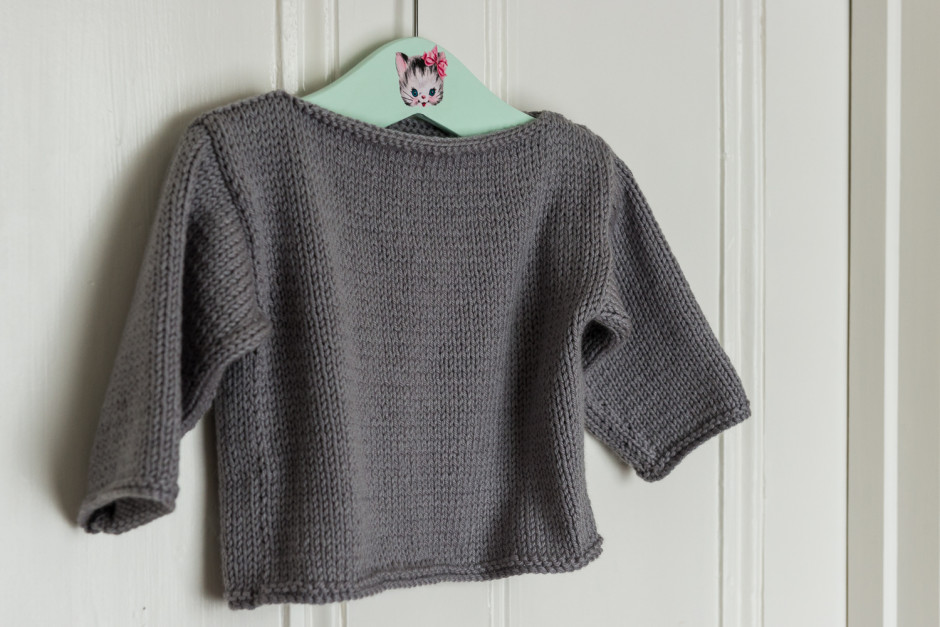
As a maker / designer, I'm not really big on embellishment unless we're talking Christmas, which I love to cover with sequins, beads and glitter at every opportunity. I do knit and crochet with sparkly yarn too, but I wouldn't normally dream of embroidering a piece of knitwear. Sometimes though, things are just too plain – like the little silver coloured baby jumper I made recently:

Whilst I love the simple clean look of the mini boat neck sweater, it was just crying out for a little fun to be injected, so I thought it was a good time to learn Swiss darning or 'duplicate stitch', which involves stitching on the knit side of stockinette stitch (there's a piece over on Mollie Makes that explains all).

From what I've gathered so far, duplicate stitch can be used in lots of different ways in knitting. You can use it to make a simple decorative edging (there's a step by step at the source for this picture):

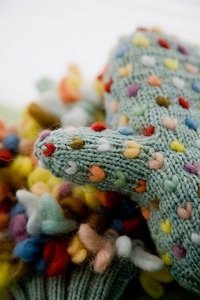
Or perhaps an all over pattern?  This is actually called 'thrummed knitting' where you create the 'duplicate' stitch with wool roving, which makes for a very messy looking, but supremely warm wrong side (check out this free pattern):

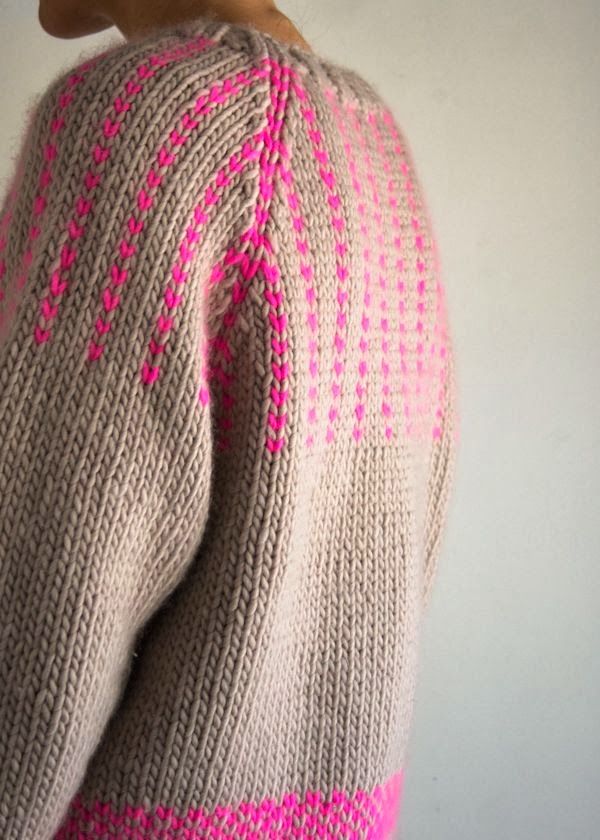
Duplicate stitch also looks great when used as an integral part of the design – especially if you choose a colour that really stands out from the background, as the Purl Bee have with this Friendly Fair Isle sweater (pattern link here):

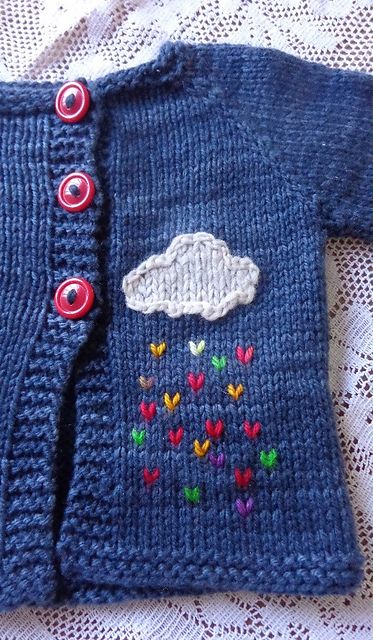
It does seem to be a technique that lends itself to making it up as you go along too, as with this very simple but effective design on a child's cardigan:

The way it seems to be most commonly done though is to create a motif from a chart.  I actually bought a little collection of charts for my motif, but you could easily use any other kind of free chart available on the internet, and I reckon cross stitch charts would be great for this too.  You can also create your own charts of course, there's a useful piece about that on 'Knitty'.

Here's my little sweater with its foxy motif:

I do like the look of the final result, although it wasn't without challenges…  The back of the motif can be rather messy if you're working with several colours – it's an awful lot of yarn ends to have to weave into a small space when you think that you not only have to weave in the start of each piece of thread to anchor it, as well as the end.  If covering a large area, you'll also need to use several pieces of thread for each colour, if you're to avoid unwieldy lengths of yarn to stitch with.  For my motif, I used yarn of the same aran weight as the sweater, but I stupidly chose to use cotton, which meant that it didn't have enough body to entirely cover the 'v' of the knit stitch underneath and it feels a bit stiff (cotton, just ain't stretchy like wool!).  I think what I'd do next time is to use exactly the same yarn for the stitching that I used for the knitting below or, if I couldn't get the colours I needed in that yarn, make sure the replacement is as close a fibre match as possible.  All in all though, I will definitely use the technique again – at least until I master knitting intarsia with enough speed to avoid making it feel like torture!

All posts

A saunter down memory lane

February 5, 2015

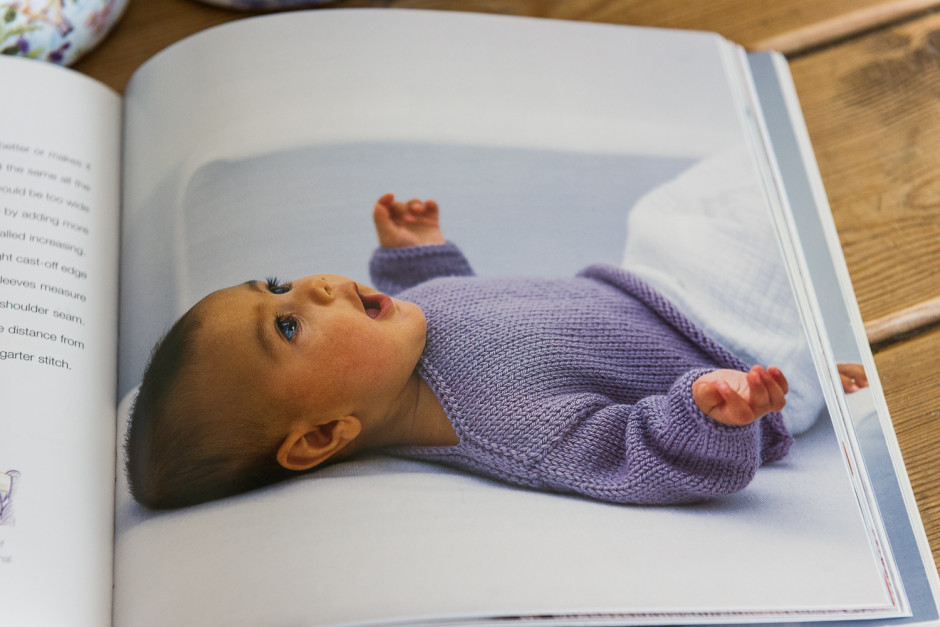
When I was dashing about my favourite yarn stores online at the beginning of this year checking out the sales, I noticed some Debbie Bliss Aran Cashmerino and was immediately reminded of the very first piece of clothing I knit, which used this yarn. It was this cute little boat or slash neck baby sweater:

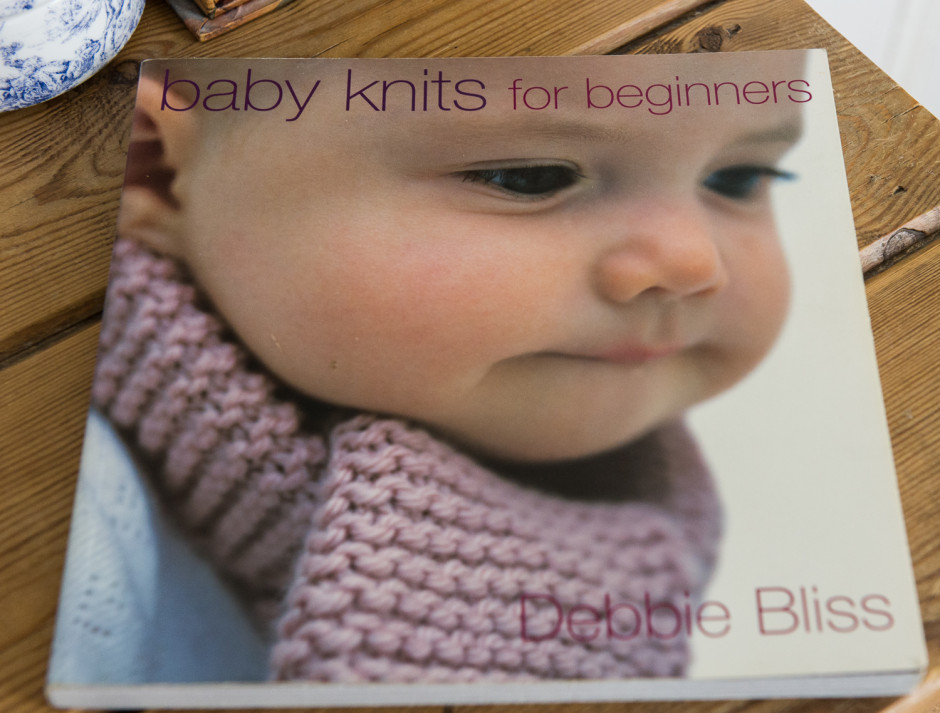
It was a super easy and straightforward pattern, which was perfect for me at the time as I'd only made flat non-seamed things to this point and was keen to develop my skills and expand my knowledge.  As there was a baby in the family at the time, this looked like just the ticket! I ended up making quite a few of the pieces in the book, so it was a brilliant investment and I'd definitely recommend it, not only for the patterns, but also for the technique notes, which are very clear and easy to follow:

I originally made this little sweater in a deep red purple colour for my niece and was thrilled with the yarn, which seemed incredibly soft. Since then, I've had the pleasure of working with lots of much softer yarns, but this one is still very nice and very practical for babies as it's soft and machine washable too. Unfortunately, I don't have a picture of this original sweater but am delighted to say that when it was outgrown, it was handed down to a teddy bear that another aunt made for my niece, which is lovely.

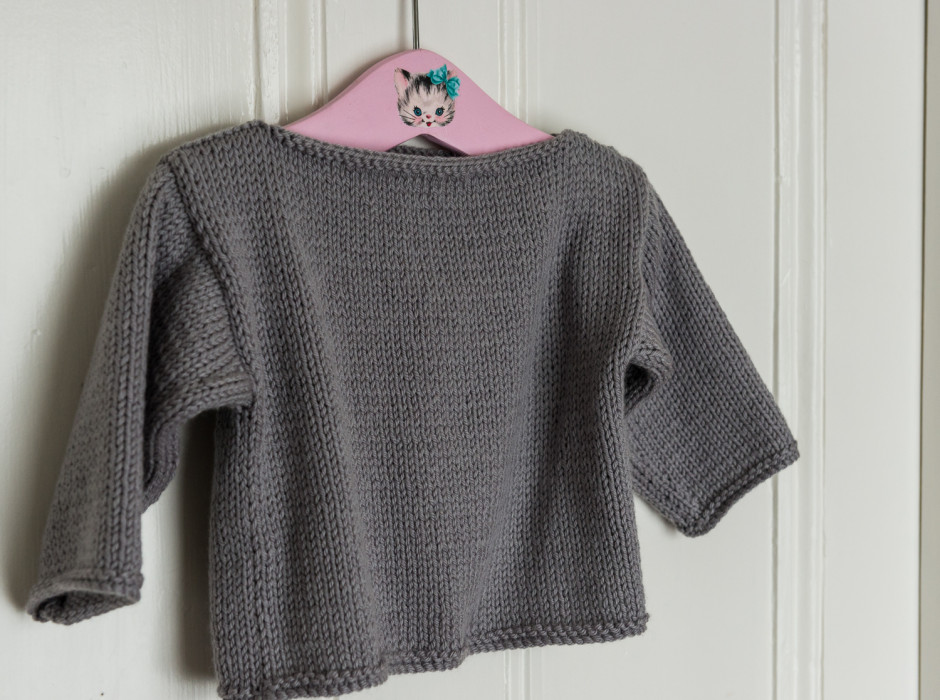
So I thought it would be fun to make this little boat neck sweater again now, so many years later, and see how it felt. The Cashmerino Aran I selected this time was a lovely Silver shade and I like how it looks against the pink of this hanger:

And against this minty green one:

In fact, it'll go with lots of colours I think – truly unisex!

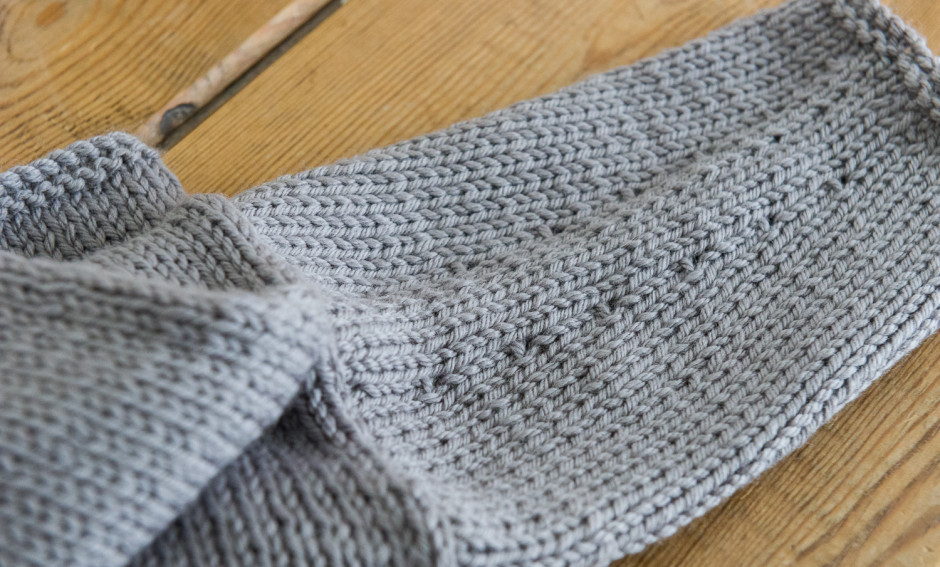
It took me a while to knit the original sweater but I expected it to be really quick this time – I've had a lot of practise since, after all… Sadly, it wasn't that quick, despite being basic stocking stitch and an aran weight yarn…  But, I could now bring more technique of my own to the pattern and add little details like fashioned shaping on the sleeve increases:

I also found it much easier to stitch everything together perfectly, which always makes the little OCD fairy who lives inside me very happy 🙂

All in all, it was an interesting experiment to make this pattern again, but I can't say I enjoyed it all that much – it was a little bit dull – poor little sweater.  I definitely did not enjoy all the seaming and put it off for ages – something that I always used to do when I first started knitting, so some things definitely don't change!

The question now is, what to do with the little sweater?  I don't know anyone with a baby this size (9 to 12 months) to gift it to, so I'm wondering if I should have a little giveaway on my Facebook page.  Any suggestions anyone has would be welcome!


All posts

And now for something completely different

January 29, 2015

Making something new and trying out a new technique is a great way to start the new year, don't you think? Another great way to start the new year is buying yarn – ahem…

I made it to my first ever yarn release on the Skein Queen web site this month and managed to snag several lovely hand dyed skeins, although I was absolutely amazed at how quickly all those lovely skeins of yarn flew out of the virtual doors almost as soon as they opened at 8pm!

This was one of my purchases – a merino and silk blend fingering yarn (called 'Selkino') in colourway St Emilion:

I was buying this to make a simple lightweight scarf that could be worn indoors for a commission, but as soon as I saw it, I wanted to make something a little more ambitious and special – especially since my client had put such a lot of thought into selecting just the right yarn for her scarf.

A short while ago, I'd spotted a lovely lace knit shawl pattern called 'Love in a Mist' by Boo Knits on Ravelry, which we decided would be just the thing!  I don't knit that much lace, although I crochet a lot of it.  I'd certainly never knit a crescent shape shawl before, and I'd never knit with beads either, both of which are part of this pattern.  In for a penny, as they say…

So buying beads was next and I selected Miyuki Triangle beads in size 5, as the pattern recommends.  The ones I chose are berry coloured on the outer and gold inside, which goes beautfully with this richly red and spicy looking yarn.  Obviously, I couldn't just buy one set – I needed more to go with my other Skein Queen purchases 😉

Just about everyone's review of this pattern that I read on Ravelry was really postitive – glowing in fact – so I have to put the problems I had with it down to my own dimness.  To be fair, I don't think this is intended to be a lace beginner level pattern although most comments said it was very straightforward and a "quick knit" – au contraire, in my experience!  It may well be that everyone commenting had already done a decent amount of lace / crescent shawl type knitting because the main problems I had with following this pattern were around the things that weren't stated or specified in its pages.  There are 2 lace section size options in the pattern that require different amounts of yarn, but there is also reference to another option to make a larger stocking stitch section before you get to the lace, but no clear absolute yarn quantity requirements for each alternative.  The pattern also clearly wants you to use stitch markers but I was clueless about how to use these properly when lace knitting and spent some time reading up about lace knitting to work this out, which I did eventually.  I don't think either of the problems I had would have caused any issues for the experienced lace shawl knitter so, as I say, I can't knock the pattern for it.  Other than that, the pattern is straightforward enough, you just need to really concentrate and keep checking your stitch count – hence all those little markers…

Most shawl knitters seem to use circular needles to knit, which makes sense if you knit a lot of shawls, which often call for you to carry a lot of stitches.  I do knit on circulars when I'm knitting in the round, but they're never my first choice – my hands and arms are much more used to straight needles, so that's what I used for this.  The shawl looked super weird when I first got started though:

The open side to the right is the cast on edge and what will eventually be the top, neck edge of the shawl.  I found that the stocking stitch section went pretty quick to begin with, although it obviously started to slow down as I increased stitches on every row.  I was soon into the lace and beading section though:

I was delighted with how easy it was to add the beads with a 1mm crochet hook, which I'd expected to be super fiddly.  With all the increases needed to work towards the picot edging, I very soon ran out of my 'official' stitch markers, so took to using a little pack of gold jump rings that I had.  The open part of the jump rings did get caught a couple of times on the yarn, but by and large, they worked great and also looked pretty! 🙂

Probably because this was something new, I knit the shawl quite obsessively and it didn't take too many days (although plenty of hours!) before I was finished.  The cast off row took a long couple of hours because you create the picot edging as you cast off, casting on 3 new stitches then casting off 6, from one edge to the other.  Once it was off the needles, it looked like a crumpled old shoe!

The beads were already sparkly though 🙂  After weaving in the ends and stitching them into place with matching coloured thread, it was time to start the blocking.  Unfortunately, I don't have a special board to do this on, nor those fab looking blocking wires and pins, so I blocked it in sections on the ironing board, which worked just fine:

I put a pin into each picot at the bottom edge and then pinned the top edge so that it was the right shape and just taut – but not too taut.  I then placed a damp pressing cloth over the section and pressed it with a medium hot, dry iron.  You don't actually push the iron about and 'iron' it, you just hold the iron onto it in small sections for about 3 seconds at a time and that's plenty to set the yarn into shape.  The metamorphosis of the shawl after blocking is so exciting!  Wwwweeee!  It's got wings!

It looks so pretty and delicate:

Are your shoulders cold?  No problem:

Want to look all drapey and chic?  Okay:

Love those sparkly beads:

Like little shards of amber up close:

And those delicate, prettily curling edges:

Safe to say that I will be knitting this lovely shawl again – probably with this Skein Queen beauty – a 70% baby alpaca, 20% silk and 10% cashmere blend called 'Enchant' in 'Crocus with Saffron'.  Just the thing to go with those pretty little sparkling lilac beads I bought 🙂